Introduction
Not every email address is created for long-term communication.
Some email addresses are created for a single purpose and then abandoned within minutes.
These are known as disposable email addresses.
While they may seem harmless, disposable emails can create serious challenges for businesses running email marketing, lead generation, and customer onboarding campaigns.
Let's answer the most common questions about disposable emails.
What Is a Disposable Email Address?
A disposable email address is a temporary email account created for short-term use.
Users typically create these addresses when they want to:
Avoid sharing their real email address
Sign up for a website quickly
Access free content
Download resources anonymously
Reduce spam in their primary inbox
Unlike traditional email accounts, disposable emails are often deleted automatically after a short period.
How Do Disposable Email Services Work?
Disposable email providers generate temporary inboxes that can receive emails instantly.
Users can:
Generate a temporary email address.
Receive verification emails.
Complete registration or access content.
Abandon the email address permanently.
Popular temporary email services make this process extremely simple.
Why Do People Use Disposable Emails?
There are many legitimate reasons.
Privacy Protection
Users may not want to share personal email addresses with every website they visit.
Avoiding Marketing Emails
Many people use temporary emails to avoid future promotional messages.
Testing and Development
Developers often use disposable emails when testing applications and workflows.
Accessing Free Resources
Users sometimes create temporary emails to download eBooks, templates, or trial software without committing to future communications.
Are Disposable Emails Valid?
Technically, yes.
Most disposable email addresses are capable of receiving messages.
However, they often provide little long-term value for businesses because the user may never access that inbox again.
Why Are Disposable Emails a Problem for Businesses?
Poor Lead Quality
A disposable email rarely represents a long-term relationship.
The person may have no intention of engaging beyond the initial signup.
Reduced Email Marketing Performance
Subscribers using temporary emails often:
Ignore future campaigns
Never open emails again
Never convert into customers
Inflated Database Size
Disposable emails make email lists appear larger than they actually are.
This can distort marketing metrics and reporting.
Increased Costs
Many email platforms charge based on the number of contacts stored.
Keeping thousands of disposable emails in your database can increase costs without delivering value.
How Can Disposable Emails Affect Deliverability?
While disposable emails do not always cause immediate delivery failures, they can negatively impact:
Engagement rates
Open rates
Click-through rates
Sender reputation
Mailbox providers monitor engagement signals closely.
Low engagement can reduce future inbox placement.
How Can You Identify Disposable Emails?
Disposable emails often come from known temporary email providers.
Examples may include domains specifically designed for:
Temporary signups
Anonymous registrations
One-time use inboxes
Modern email verification tools maintain databases of disposable email domains to help businesses identify them.
Should You Block Disposable Emails?
The answer depends on your business goals.
When Blocking Makes Sense
Consider blocking disposable emails if:
Lead quality is important
You run email marketing campaigns
You offer free trials
You rely on long-term customer communication
When Allowing Them May Be Acceptable
Disposable emails may be acceptable if:
User friction is a concern
You offer free tools or public resources
Long-term communication is not required
What Is the Difference Between Disposable and Invalid Emails?
Many people confuse these two categories.
Disposable Emails
✔ Can receive messages
✔ Usually function correctly
✔ Temporary by nature
✔ Low long-term value
Invalid Emails
❌ Cannot receive messages
❌ Mailbox does not exist
❌ Likely to bounce
Disposable emails are valid but temporary.
Invalid emails are simply undeliverable.
How Can Businesses Reduce Disposable Email Signups?
Several approaches can help.
Use Email Verification
Verification tools can identify known disposable domains before users are added to your database.
Implement Double Opt-In
Double opt-in ensures users actively confirm ownership of their email address.
Monitor Signup Sources
Some acquisition channels may generate significantly more disposable email registrations than others.
How ClearBeez Helps
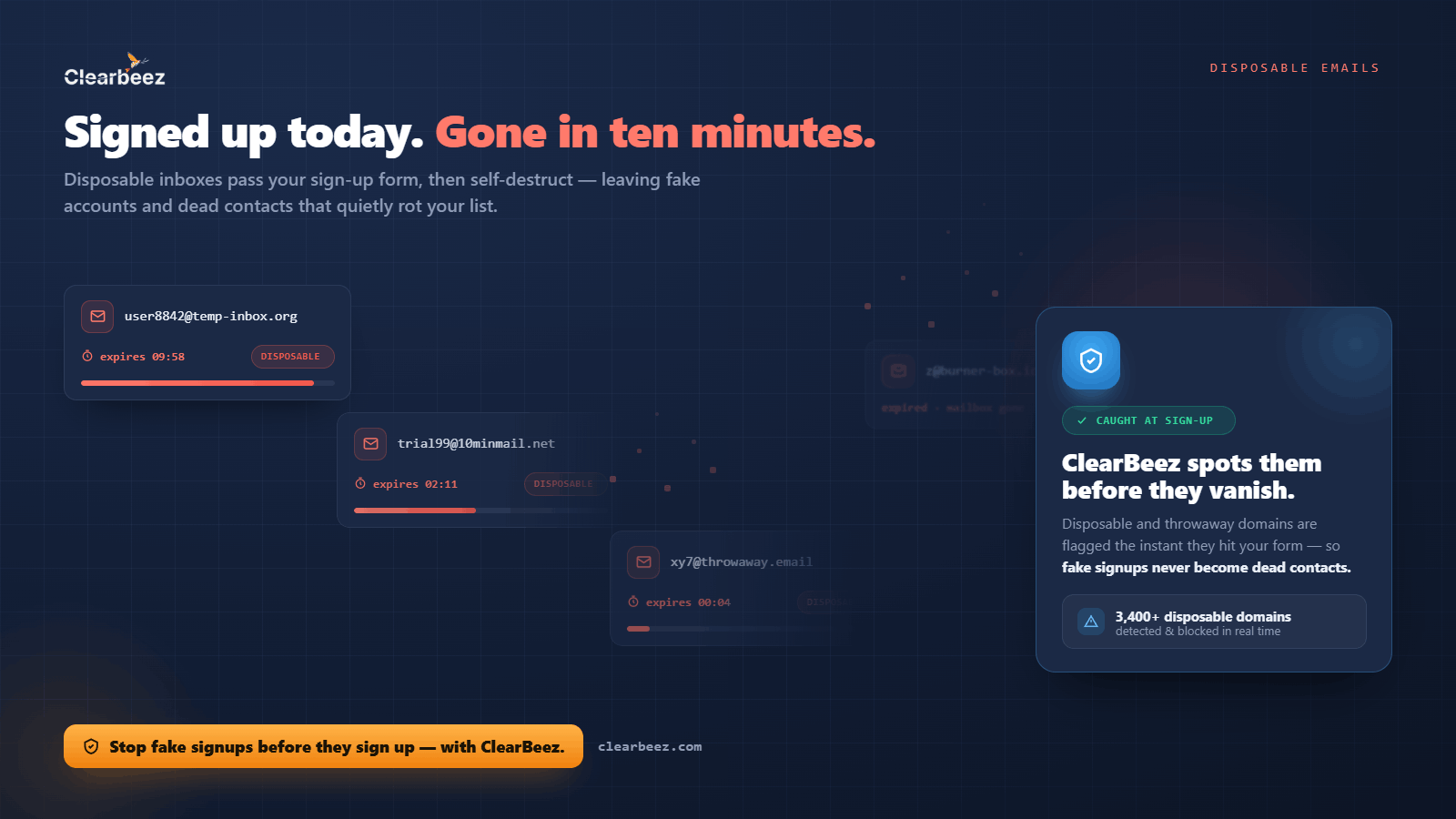
ClearBeez identifies disposable email addresses during the verification process.
This allows businesses to:
Improve lead quality
Maintain cleaner databases
Reduce marketing waste
Improve campaign performance
Protect sender reputation
By filtering disposable emails before they enter your system, businesses can focus on contacts that are more likely to engage and convert.
Frequently Asked Questions
Are Disposable Emails Illegal?
No.
Disposable email services are completely legal in most regions.
Can Disposable Emails Receive Verification Emails?
Yes.
That's one of the primary reasons people use them.
Do Disposable Emails Hurt Deliverability?
Indirectly, yes.
Large numbers of disposable emails can reduce engagement and negatively affect sender reputation over time.
Should Every Business Block Disposable Emails?
Not necessarily.
The decision depends on your business model, acquisition strategy, and communication goals.
Final Thoughts
Disposable emails are not always harmful, but they rarely contribute to long-term customer relationships.
For businesses focused on lead quality, engagement, and deliverability, identifying and managing disposable emails is an important part of maintaining a healthy email database.
The goal isn't simply to collect more email addresses.
It's to build a list filled with real people who want to hear from you.